
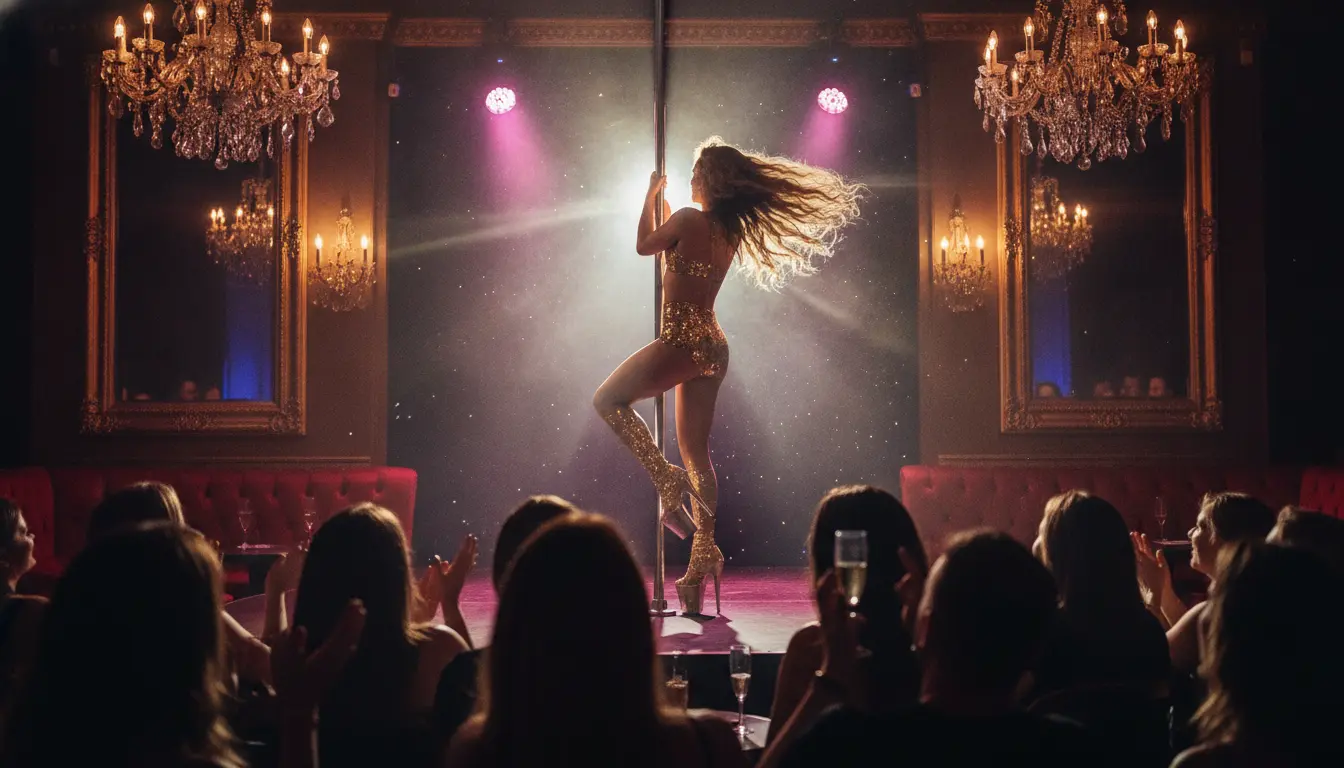
He started by renting a Sheffield church hall on Friday nights and ended up with the most famous club name in London. Peter Stringfellow’s career runs straight through the history of British nightlife, from 1960s beat clubs to the licensing rules every gentlemen’s club in England works under today. Eight years after his death, the brand has just won a licence for a second London club.
Sheffield church halls and the Beatles
Stringfellow was born in Sheffield on 17 October 1940, the eldest of four brothers and the son of a steelworker, according to The Scotsman’s obituary. In 1962 he began hiring St Aidan’s Church hall on Friday nights and running it as the Black Cat Club. On 2 April 1963 he brought the Beatles to Sheffield, the booking the same obituary calls the turning point of his career.
The King Mojo Club followed in 1964. Over the next few years The Who, Pink Floyd, Rod Stewart and Elton John all played there, and so did some of the first Motown acts to perform in Britain. None of this had anything to do with dancers or table service. It was the beat-club business, built on cheap rooms, good bookings and a promoter who understood that people came for the atmosphere as much as the band.
From Sheffield he moved to Leeds and then Manchester. His Wikipedia biography lists Cinderella’s in Leeds in 1970 and the Millionaire Club in Manchester in 1976, which he sold to Granada in 1980 before heading south.
Covent Garden, 1980: a nightclub, not yet a strip club
Stringfellows opened in Covent Garden in 1980, as both ITV News and The Scotsman record. For its first decade and a half it was a celebrity nightclub, a place to be seen rather than a place to watch a show. ITV lists Prince, Marvin Gaye, Rod Stewart and Tom Jones among the guests the club claimed over the years.
Expansion came quickly. He took over the London Hippodrome in 1983, and then went abroad: New York in 1986, Miami in 1989 and Los Angeles in 1990, according to his biography, with ITV also naming Paris. The American clubs ran straight into a recession, and his biography records heavy financial losses from 1989 onwards.
The switch to table dancing
The change that tied his name to this industry happened in the 1990s. The Scotsman notes that he introduced table dancing first at his New York club and then in Covent Garden. In 1996 the London flagship began running table-side dancing three nights a week under the name Cabaret of Angels, a move our own timeline of striptease marks as one of the turning points for British clubs.
It was a business decision as much as anything. He had already run the format in New York, where his biography says he brought in table dancing in 1990 through a licensing deal with the American operator Michael J. Peter. London simply got it a few years later, and the club that had been known for pop stars and late nights became known for its dancers instead.
A second London venue, Angels on Wardour Street in Soho, opened in 2006. It did not last. In October 2017 The Yorkshire Post reported that Angels had closed because the area was being redeveloped, leaving Covent Garden as the only club in his portfolio.
Licensing fights that shaped the rules
Stringfellow was rarely quiet about regulation, and the rules he argued over still apply. Until 2010, lap dancing clubs in England and Wales were licensed under the Licensing Act 2003 in much the same way as bars, which left councils with few grounds to refuse them, according to a House of Commons Library briefing.
The Policing and Crime Act 2009 changed that. It reclassified the clubs as sexual entertainment venues, or SEVs, and from April 2010 in England councils that adopted the regime could license them as sex establishments. The briefing explains that SEV licences last a year, that councils can refuse on grounds such as the character of the area or the number of venues already there, and that objections cannot be made on moral grounds. Stringfellow criticised the change at the time, and in 2012 both his London clubs were granted SEV licences under the new system, his biography records.
His name is also attached to the best-known employment case in the industry. In Stringfellow Restaurants Ltd v Quashie, decided in 2012, the Court of Appeal held that a dancer who had worked at the group’s London clubs was not an employee. It is a case every dancer in Britain should know about, and one reason our guide to house fees, commission and contracts tells dancers to read the paperwork before they start.
After 2018: the brand without the man
Stringfellow died on 7 June 2018, aged 77, after an illness he had kept private, ITV reported. His publicist said at the time that the London club would carry on as normal. We covered the news the week it happened.
The club did carry on, and in 2026 it moved to grow again. In March, Time Out reported that Stringfellows had applied to Westminster City Council for an SEV licence and a premises licence at 8–9 Dover Street in Mayfair, a building that had stood empty for several years. Residents’ groups and the Metropolitan Police objected, citing noise and late-night disorder.
Westminster’s licensing sub-committee granted both licences after a hearing on 4 March, the Local Democracy Reporting Service reported. The premises can open from 3pm to 6am every day, with alcohol until 5am, and are capped at 175 people, falling to 100 between 3am and 6am. The club’s barrister told the hearing that the SEV activity would take place in the basement. No opening date had been announced in the reports we found.
It is a fitting postscript. The man who spent years arguing with Westminster about what his clubs could do left a brand that now goes through the same council’s SEV process like every other operator in the city. For visitors, the Covent Garden club is in our directory as Stringfellows on StripClubGuide, alongside the rest of the capital’s venues in the London strip club guide. Dancers looking for work in the city can find current openings on StripRecruit’s London page.
FAQ
When did Stringfellows open in London?
Peter Stringfellow opened Stringfellows in Covent Garden in 1980. It began as a celebrity nightclub and moved to table dancing in the 1990s.
When did Peter Stringfellow die?
He died on 7 June 2018, aged 77, after a private battle with cancer.
Is Stringfellows opening a club in Mayfair?
Westminster City Council granted Stringfellows an SEV licence and a premises licence for 8–9 Dover Street in March 2026. We have not seen an opening date confirmed.
What is an SEV licence?
A sexual entertainment venue licence is the licence a lap dancing or gentlemen’s club needs in council areas that have adopted the regime introduced by the Policing and Crime Act 2009. It is renewed every year, and councils can limit how many venues an area has.

Author: Saxon
Strip-magazine.com is covering the European Striptease industry with monthly updates on or famous London Gossip, Interviews with industry people, articles and news from the world of striptease. We also offer a Striptalk forum, Industry Directory with Stripclubs and Agents and a Job board for the Striptease industry in Europe.